What a Coordinated System Could Look Like
Current Multnomah County Homeless Response System
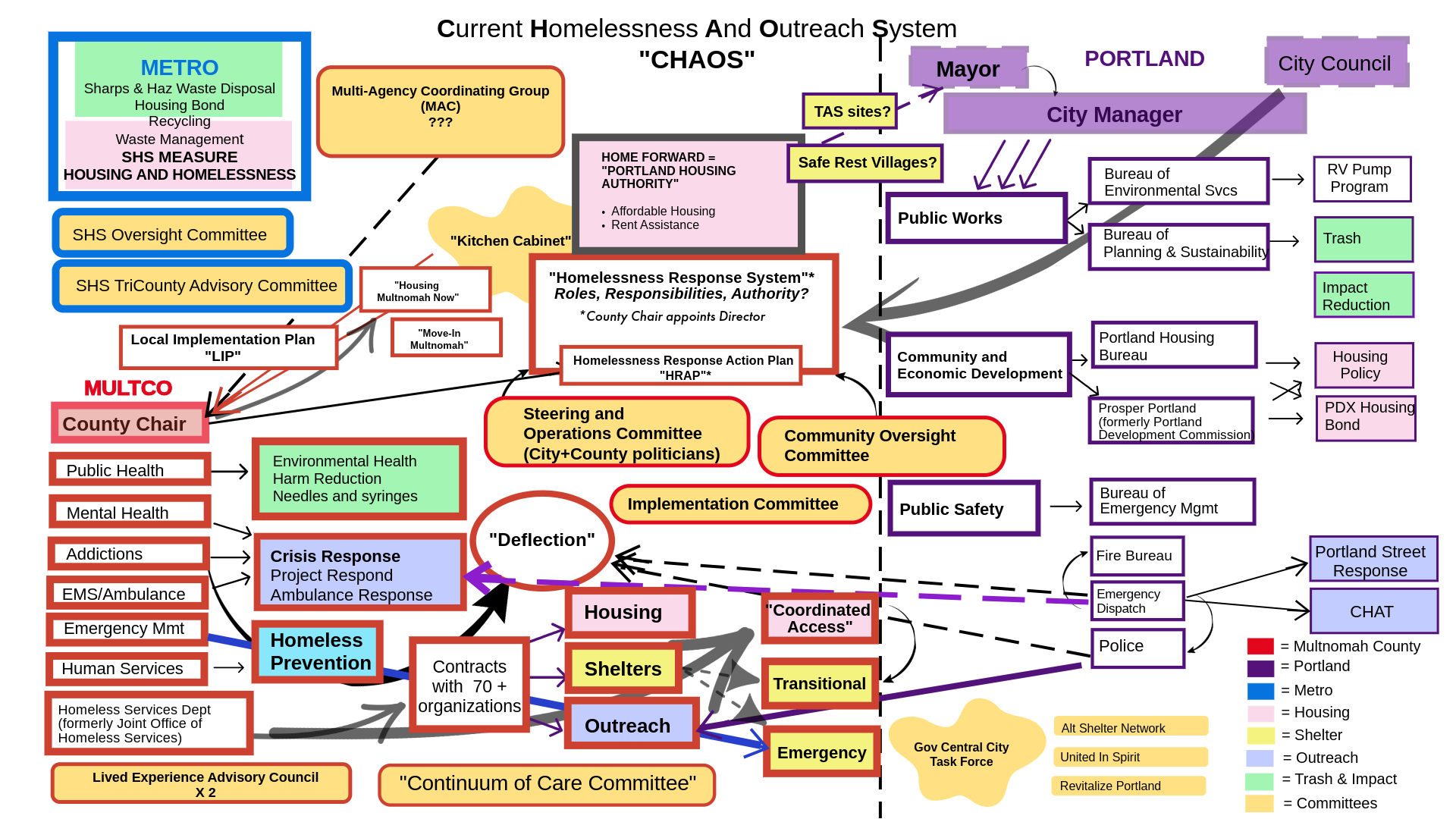
We have a nonsystem created by plastering more layers of dysfunctional bureaucracy onto the previous layers that have failed. A picture speaks a thousand words, reflecting the non-system we have established, better referred to as “chaos” (Current Homelessness And Outreach System).
The solution to homelessness is not as complicated as we’re making it. Though the problem of homelessness is seemingly intractable, the approach to ending it is actually straightforward.
Proposed Results Driven Coordinated New Structure
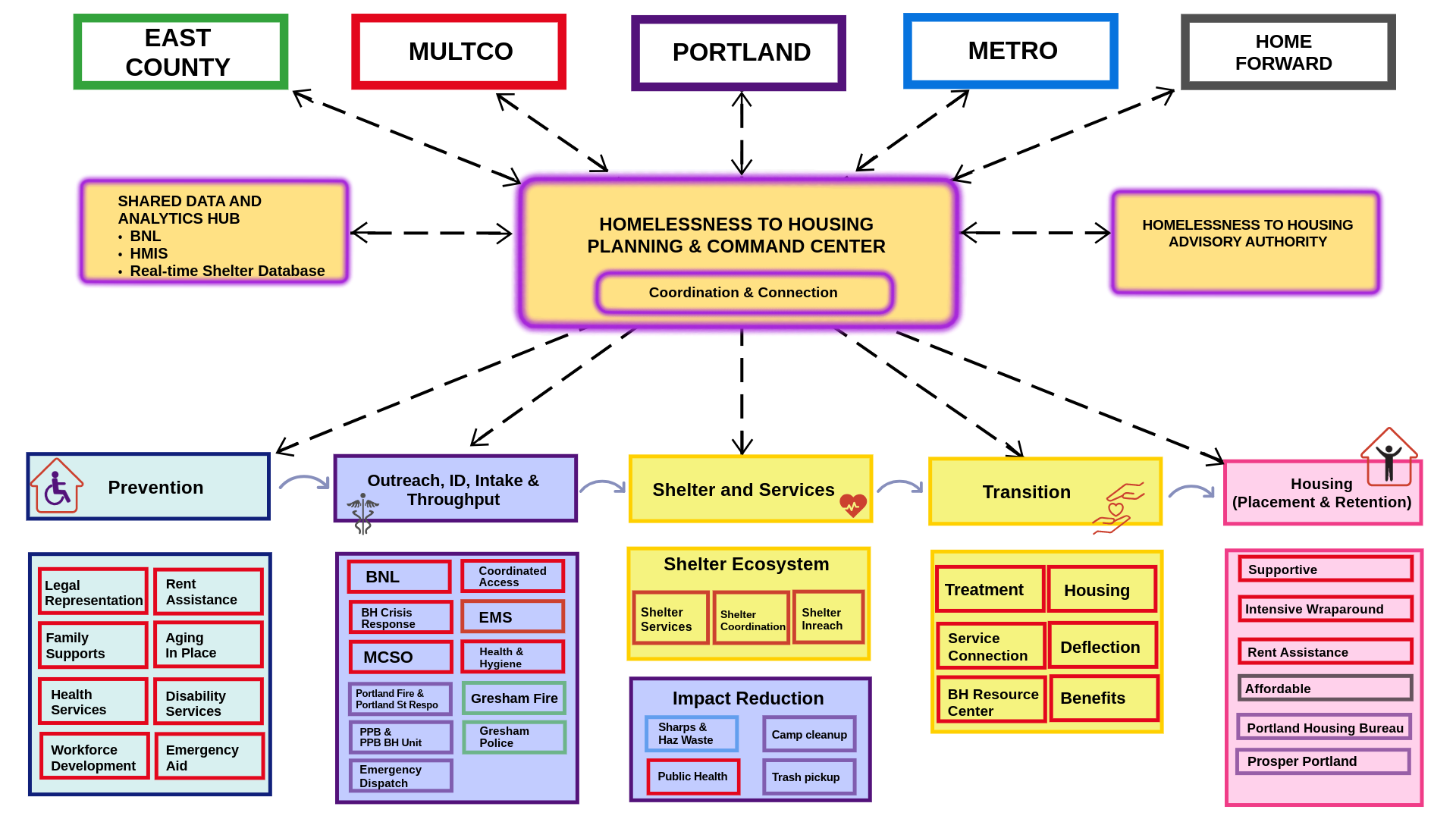
Proposed Results Driven Coordinated New Structure
To the left, instead, is a rational continuum aligned with the proper supports, stakeholders and funding streams. This is the model we must move toward.
It is a matter of defining a comprehensive shared vision with meaningful goals, a clear chain of command, and an effective and accountable governance structure led by independent subject matter experts. To date Multnomah County has done none of these things, but they are eminently doable.
A Yiddish word, farpotshket, does a great job of encapsulating the problem in Multnomah County– it refers to efforts to fix things that end up making them worse. The hopelessly convoluted diagram of current Multnomah County’s “homelessness response system” shows why.