Dear friend,
As this campaign comes to a close, I want to return to the big picture—and end on a note of hope.
Over the past several months, I've used real-time headlines to illustrate deep-rooted problems in county government: lack of accountability, poor leadership decisions, budgets disconnected from results, and programs that spend millions without demonstrating whether they're actually helping people.
There's so much more I wanted to share. That's why I created FixMultCo.com—to explain what the county does, dig beneath the headlines, and connect the dots. Along with my Comprehensive Turnaround Plan, it will remain a resource regardless of the election's outcome.
But of everything I've shared, one thing consistently resonates with people.
CHAOS.
When I left the county board, people kept asking me the same question: With so much money, and so many good people doing the work, why are the results so bad?
As a commissioner, I repeatedly asked for a simple flowchart showing how people and money move through our homeless services system. Who does what? Who is responsible? How does it all fit together?
No one could give me one.
So I made it myself.
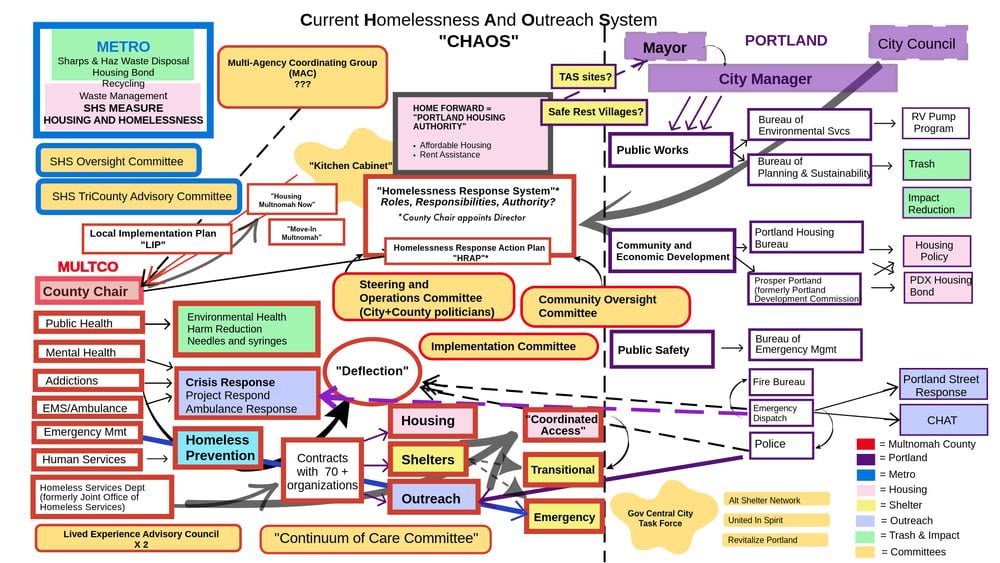
And suddenly, the problem was obvious.
We don't have a functioning homeless services system. We have a maze of disconnected programs, organizations, funding streams, and bureaucracies. Money flows in countless directions without clear accountability. People fall through the cracks.
No amount of money will fix a system that isn't organized to work.
So I drew a second picture.
Drawing on nearly two decades as an emergency physician, my work providing street medicine, and eight years as a county commissioner, I worked with experts to develop a model that connects.
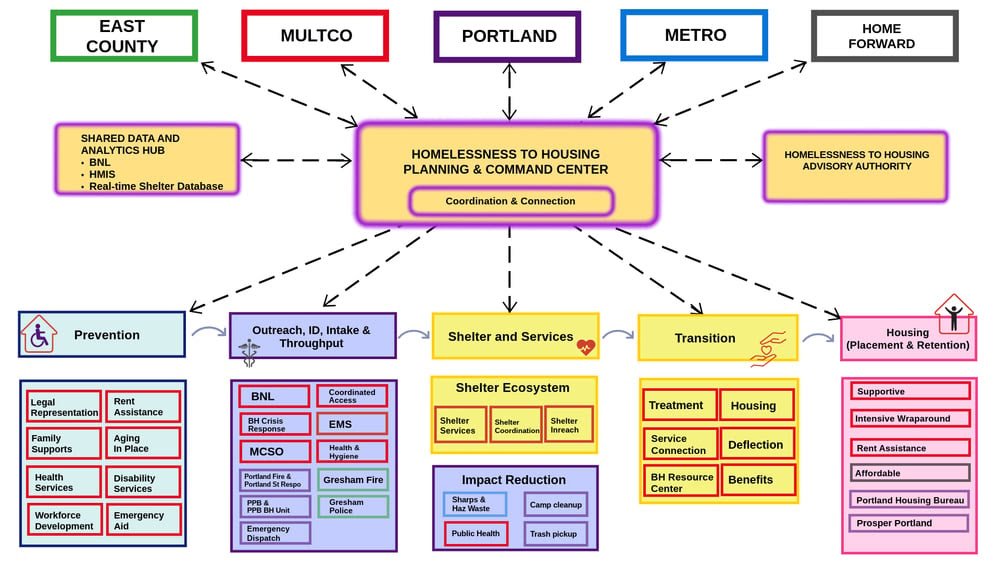
The difference isn't more bureaucracy, more programs, or even more money.
It's organizing what we already have to achieve what we actually need.
That means knowing who needs help through a real By-Name List (the county still doesn’t have one and does not know how many people are actually living on our streets). Coordinating providers and services instead of operating in silos. Sharing data and measuring whether people actually get better. Building a zero-based budget around goals and results, rather than simply rolling over last year's spending.
And accounting for every dollar.
These principles apply not just to homelessness, but to behavioral health, animal services, public safety, and everything else the county does.
Throughout this campaign, I've seen extraordinary examples of people and organizations already putting pieces of this vision into practice.
The VA Community Resource and Referral Center, whose expanded facility I recently visited, brings housing assistance, medical care, behavioral health, and case management together for veterans experiencing or at risk of homelessness.
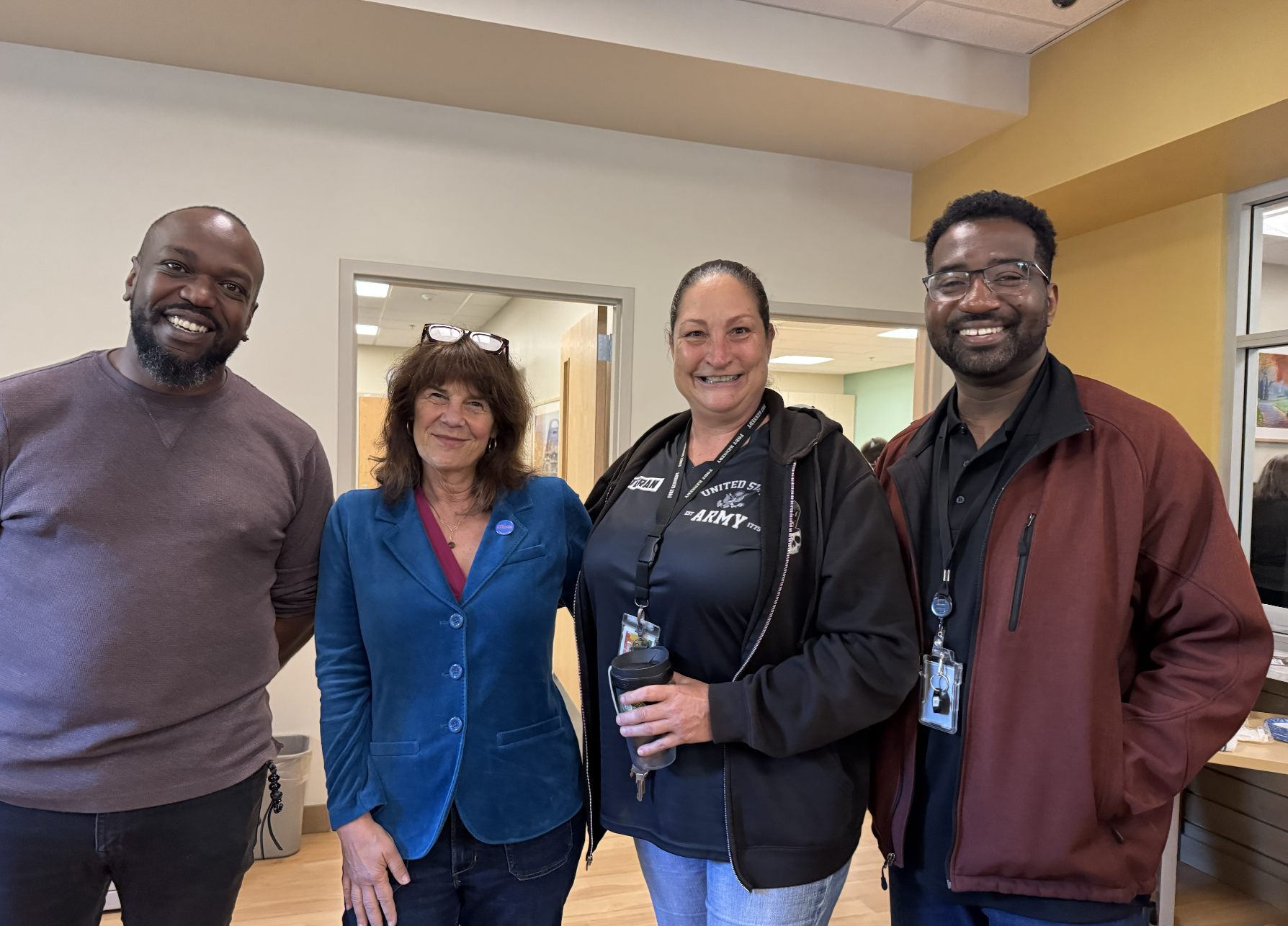
Above: VA Grand Opening event.
The Peer Company's Provider–Police Joint Connection Program, whose gathering I participated in earlier this year, offers a model for how service coordination could function. It performs the essential function of bringing together dozens of outreach providers and police to coordinate efforts and connect people on the streets directly with services.
Hope for the Homeless Foundation directs philanthropic funding toward organizations demonstrating measurable results in helping people achieve stability and housing. I was honored to provide the keynote at their recent annual gala, where I outlined the comprehensive approach to homeless and behavioral health services that can turn our county around.
Cascadia Clusters combines paid construction training, recovery support, and tiny-home development—giving people opportunities to help build both homes and their own futures. It is a successful model based on the one I successfully proposed at the county, offering opportunities to expand and scale effective shelter models meeting people’s individual needs.
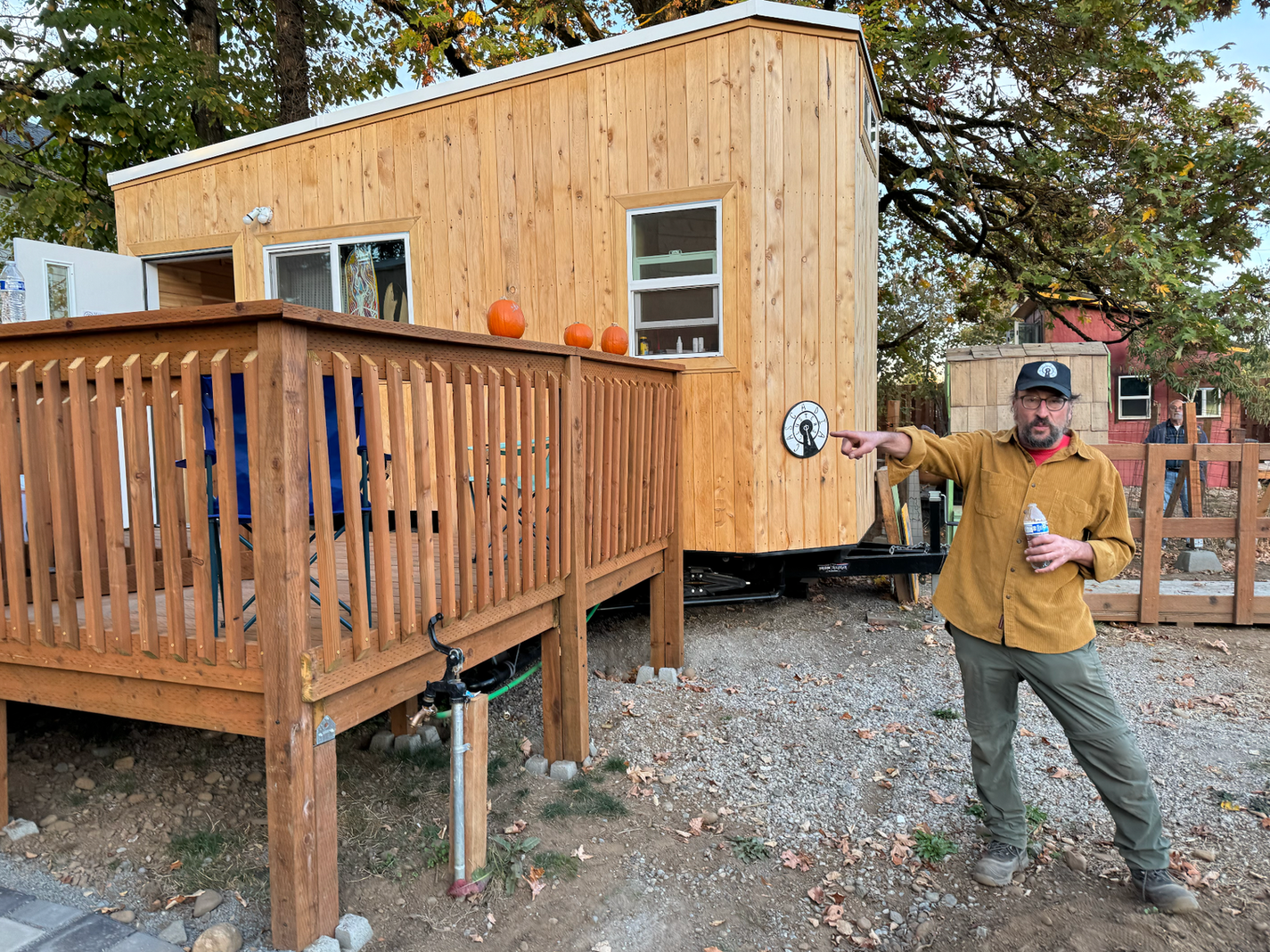
Above: Andy Olshin at the hospice unit at Cascadia Clusters.
And just this morning, I attended the grand opening of the Urban League's Jamii Center, a community hub connecting people experiencing homelessness or at risk of losing housing with housing assistance and supportive services.
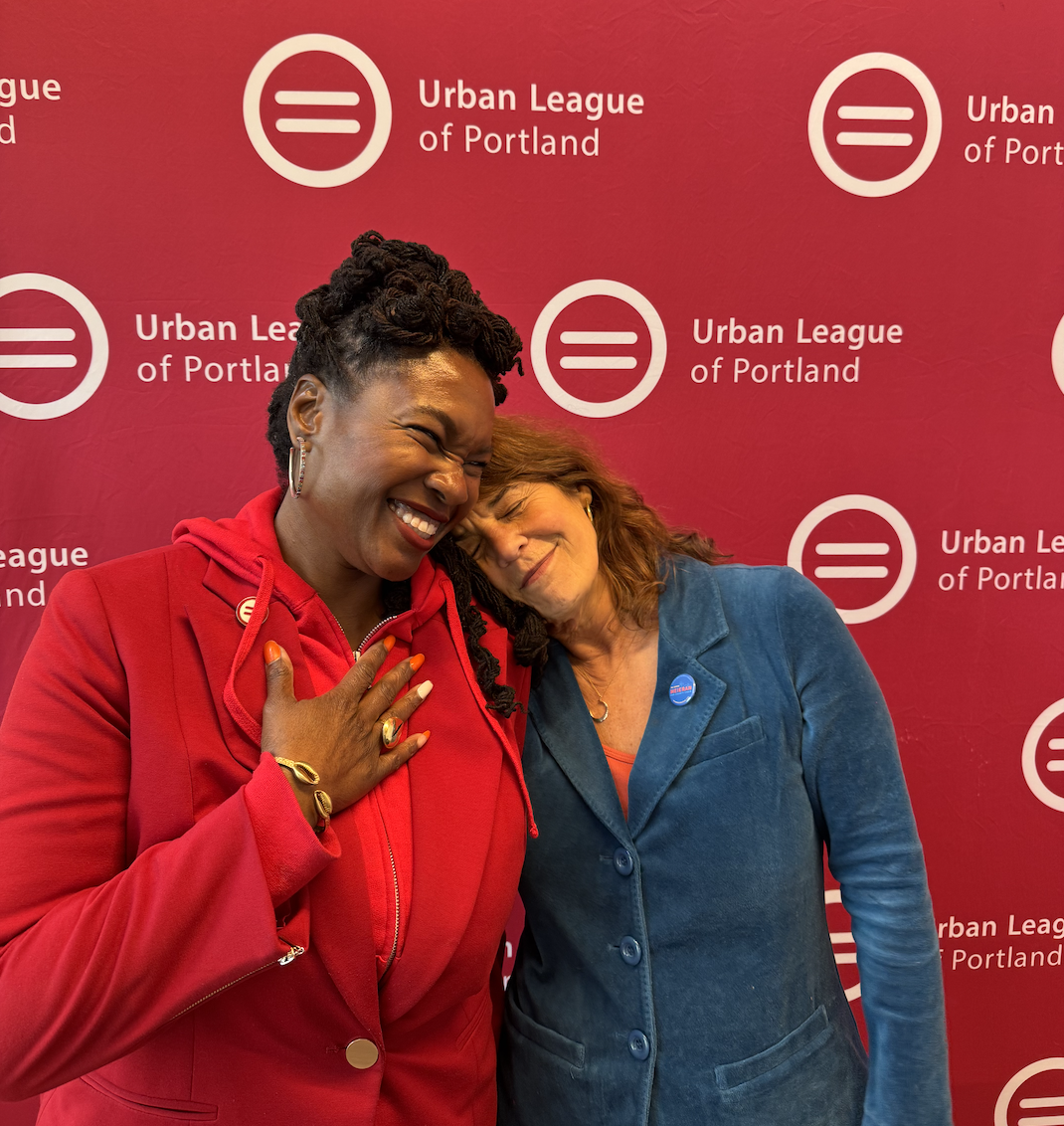
Above: With Nkenge Harmon Johnson, President and CEO of the Urban League of Portland, at the grand opening of the Jamii Center.
These are different organizations doing different things. But they share something important: people coming together, connecting services, and focusing on helping real people.
This is what hope looks like.
Imagine if, instead of succeeding in isolation and despite the county’s systemic obstacles, these efforts were supported, connected, and expanded as part of a coordinated countywide system.
We don't need to reinvent the wheel. We need to connect the dots.
We have dedicated people. We have resources. We have successful models. And we have a plan for putting the pieces together.
The opportunity is to build something greater than the sum of its parts.
That's the vision I've been working toward, and the leadership I hope to bring to Multnomah County.
Thank you for being part of this journey, for reading, questioning, engaging, and caring about the future of our community.
Tomorrow is Election Day. If you haven't voted, please do—and remind everyone you know to do the same.
Here's to a future of hope, and to finally putting the pieces together.
With gratitude,
Sharon